December 11, 2025
Cancellation flow examples to improve subscriber retention


TABLE OF CONTENTS
TOPICS
RELATED POSTS


Losing a subscriber who was on the verge of staying costs you twice. First, you lose the revenue, then you lose the chance to fix what went wrong. Cancellation flows give you that chance back.
A cancellation flow offers a company the opportunity to collect real feedback about its service/product and pricing; they're a direct way to reduce churn. Companies that implement cancellation flows see measurable improvements in retention. When you retain a customer for even a few more months, you add multiple renewal cycles, which helps lower re-acquisition costs and make revenue more predictable.
In this article, we'll walk through cancellation flow examples. You'll see how these companies collect feedback, surface alternatives, and handle the moment when customers leave. Then we'll break down which elements actually reduce churn.
Key takeaways
Retaining a customer costs 5 to 25 times less than acquiring a new one, making cancellation flows a direct lever for reducing customer acquisition costs.
Brands that offer "pause before cancel" saw pause usage increase by 337%, with 3 out of 4 of those subscribers returning within months. This is one of the powerful retention tools available.
Only 37% of subscribers report having pause options, yet businesses that offer pausing see 25% of would-be churners pause instead of cancel, generating over $200 million in re-subscription revenue.
Cancellation flows serve three purposes: deflecting cancellations with alternatives like pauses or downgrades, collecting honest feedback about why subscribers leave, and creating a frictionless exit that preserves goodwill for future re-subscriptions.
Personalized deflection tactics work better than generic ones. A subscriber canceling due to cost responds to a concrete discount offer, while one citing low usage needs feature highlights or a pause option.
The importance of the cancellation flow in subscriptions
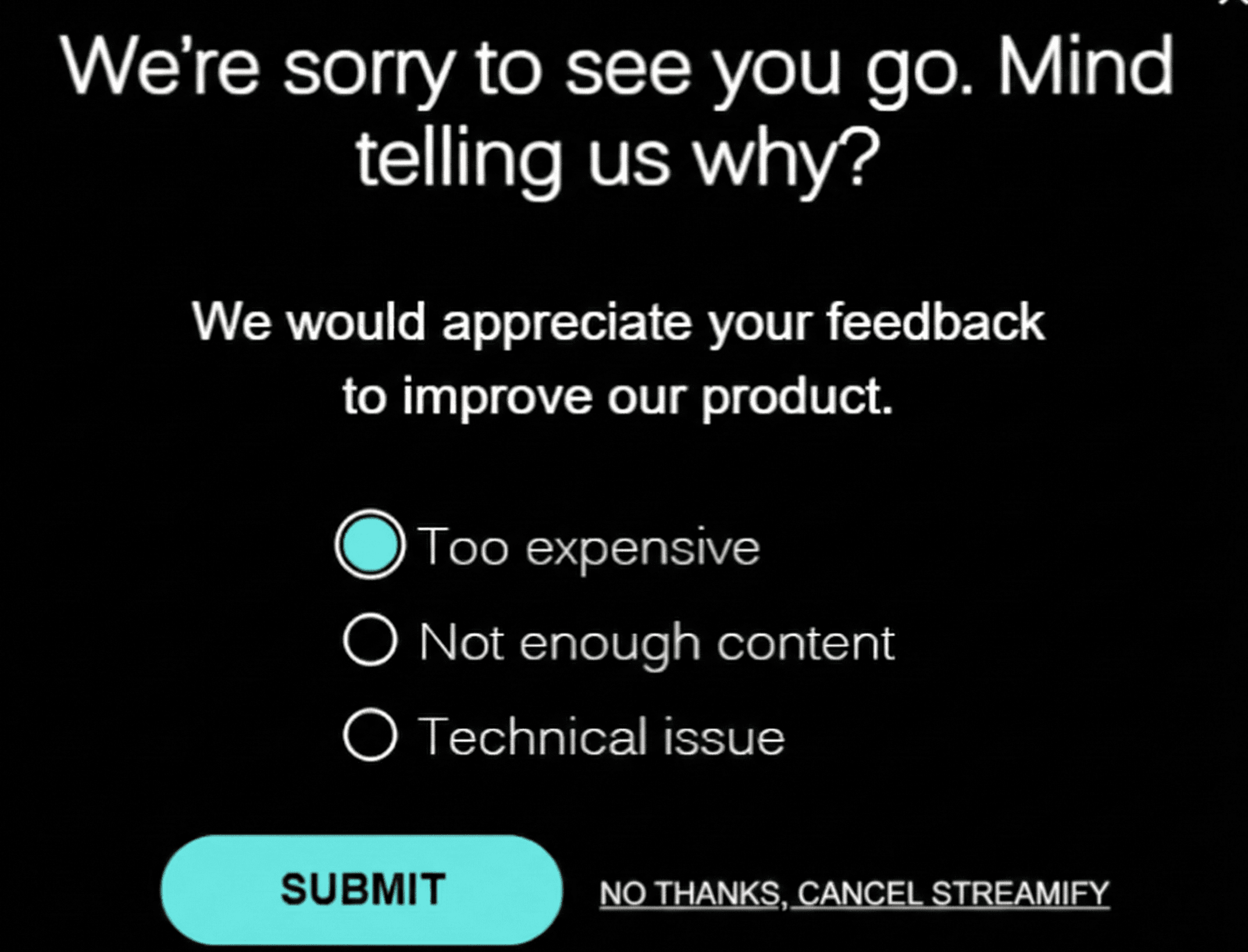
A cancellation flow is a tailored on-screen experience that appears when a customer attempts to cancel their subscription. Most likely you’ve seen one before and it can appear as a pop-up.
CAC compounds over retention cycles
Customer acquisition cost (CAC) is what you spend to bring in a new customer. It costs between 5 to 25 times more to acquire a customer than it does to keep one, depending on your industry. A retained subscriber adds multiple billing cycles without the marketing expense.
Cancellation flows recover revenue
When a customer reaches the cancel button, you have one final moment to understand why they're leaving and offer an alternative. According to Recurly's 2026 State of Subscriptions report, 52% of consumers canceled at least one subscription in the past year. Most often because they felt they weren't using it enough (51%) or the price was too high (45%). Effective cancellation flows don't just offer discounts, they provide real value and usage reminders tailored to why the subscriber is actually leaving.
Poor exits destroy future value
A poor cancellation experience turns departing subscribers into critics. They leave negative reviews, warn others away, and won't consider returning. Research shows that nearly 1 in 4 new subscriptions now comes from a previously canceled customer. When you make cancellation difficult, you lose the current subscription and close the door on recapturing that revenue later.
Subscribers expect flexibility at cancellation
Subscribers prioritize flexible pause and cancellation options when choosing a subscription. Around 38% say they prefer pausing over canceling outright. Yet flexibility remains underutilized. Brands that introduced "pause before cancel" options saw pause usage surge 337%, with 3 out of 4 of those subscribers returning within months. Giving subscribers a way to step back, rather than step out, is one of the highest-ROI changes a subscription business can make.
Defining the goals of a successful cancellation flow
Cancellation requests fall into two categories. Involuntary churn happens when technical issues or failed payment methods force a subscriber out, often without their intent to cancel. Voluntary churn occurs when subscribers actively choose to leave because they're dissatisfied with the service, found a better alternative, or simply aren't using it enough to justify the cost.
An effective cancellation flow archives three goals:
Deflection: Before accepting a cancellation, offer alternatives like pausing the subscription, downgrading to a cheaper plan, or applying a limited-time discount. Many subscribers don't want to cancel permanently; they want temporary relief or a lower commitment. This is your moment to keep them.
Data collection: Cancellation is when subscribers are most honest. Ask why they're leaving and listen. The feedback you gather directly informs product decisions and helps you spot patterns in what's driving churn.
Positive exit experience: Make cancellation frictionless. If a subscriber decides to leave anyway, honor that decision. Limit winback campaigns to a non-intrusive level (no more more than 1/week). A smooth exit builds goodwill and leaves the door open for them to return when circumstances change.
Winning examples of cancellation flows that boost retention
The most effective cancellation flows personalize the experience with data you already have: subscription history, usage patterns, and information subscribers provide during cancellation, like their stated reason for leaving. This precision allows you to offer relevant deflection options rather than generic alternatives.
The pause or skip offer
When subscribers need temporary relief, pause or skip options work better than cancellation. Position pause as the primary choice in your cancellation flow to redirect at-risk subscribers toward retention.
Common pause length options:
One month for short breaks between billing cycles
Two to three months for seasonal needs or budget adjustments
Six months for extended time away without losing account history
Custom duration that lets subscribers choose their own return date
Cinemark Movie Club discovered this through member feedback. Many wanted to step back temporarily rather than cancel permanently. Cinemark made pausing the most visible option in their cancellation flow. According to Megan Krouse, Director of Loyalty at Cinemark, "The pause feature has been a really successful component of our philosophy to 'make it easy and keep the customer first.' It's a key retention strategy that builds trust, improves satisfaction, and reduces churn, giving members a frictionless, customer-first experience."

The discount or incentive to stay
Present a personalized discount offer based on the cancellation reason the subscriber selected. If cost is the issue, offer a percentage discount for a set period. If low usage is cited, highlight new features or content they haven't explored yet.
Pricing is the second most common reason subscribers cancel (45%), behind low usage (51%). Price-sensitive subscribers respond well to concrete discount offers. A subscriber canceling due to cost responds to a tangible number, not a vague retention message.
Time your offer at the cancellation moment. By this point, the subscriber has decided to leave, so your window is narrow. A relevant discount removes the final objection.
The downgrade option
Offer subscribers a tier downgrade as an alternative to cancellation. Resource Guru built downgrade options directly into their cancellation flow, presenting lower-tier plans alongside the cancel button. This retained customers who couldn't afford premium pricing but valued the service enough to continue at a reduced cost.
Display the subscriber's current plan at the top, then show available lower tiers with pricing and feature comparisons side by side. Highlight what they keep versus what they lose. A $29/month premium subscriber might downgrade to $15/month, cutting costs in half while retaining core features. This removes the all-or-nothing choice that drives cancellations.
Self-service plan management makes this work at scale. Pipefy enabled accounts of any size to manage their billing and subscriptions without assistance, freeing their team to focus on high-value accounts while subscribers handle tier changes instantly. Dieux took a similar approach, letting customers modify their subscriptions through intuitive dashboards that require no explanation or support tickets.
Downgrades preserve the relationship when budgets tighten or usage drops. Subscribers stay engaged at a lower commitment level, continue generating recurring revenue, and can upgrade again when circumstances improve.
Post cancellation surveys and win back strategies
Cancellation data tells you why subscribers leave, and that insight powers both immediate retention and long-term product improvements.
Cancellation surveys
Ask departing subscribers why they're leaving. Their answers reveal which product gaps, pricing issues, or competitive pressures matter most to your business.
Use this feedback in two ways. First, feed it directly to your product team. If multiple subscribers cite a missing feature or technical problem, add it to your roadmap. Second, use it immediately in retention offers. A subscriber citing cost gets a discount. One citing low usage gets a feature highlight or pause option. The reason they provide shapes your response.
Track these patterns monthly. If 40% of cancellations point to the same issue, prioritize fixing it. If cancellations spike after a price increase, you know what moved the needle. This data compounds into actionable product improvements and pricing adjustments.
Customer win-back strategies
Add a resubscribe button to former subscriber account pages so they can restart in one click. They already understand your service, so remove obstacles instead of selling again.
Target former subscribers with email campaigns that reference their specific cancellation reason. If they left due to cost, offer a limited-time discount. If they left due to low usage, highlight new features or content they missed. This specificity shows you listened and acted on their feedback.
For detailed strategies on re-engaging churned customers, refer to our customer win back guide.
How to easily build unique cancellation flows with Recurly
Building a cancellation flow from scratch requires developers to code conditional messaging, dynamic offers, and personalized alternatives. Most subscription businesses build these same features repeatedly.
Recurly Engage eliminates this redundancy. Display custom messaging, banners, copy, or videos that explain staying value. Target incentives like discounts, free add-ons, or trial extensions to specific subscriber segments. Suggest dynamic alternatives such as plan swaps, frequency changes, or payment deferrals as retention levers.
You can build sophisticated cancellation flows without writing code. Test different approaches, measure results, and refine based on performance. Instead of acting as a final goodbye, your cancellation flow becomes a strategic retention tool. Ready to see how Recurly Engage can help? Get started today.



