May 28, 2026
The death of linear subscriptions: 5 SubSummit trends you need to know

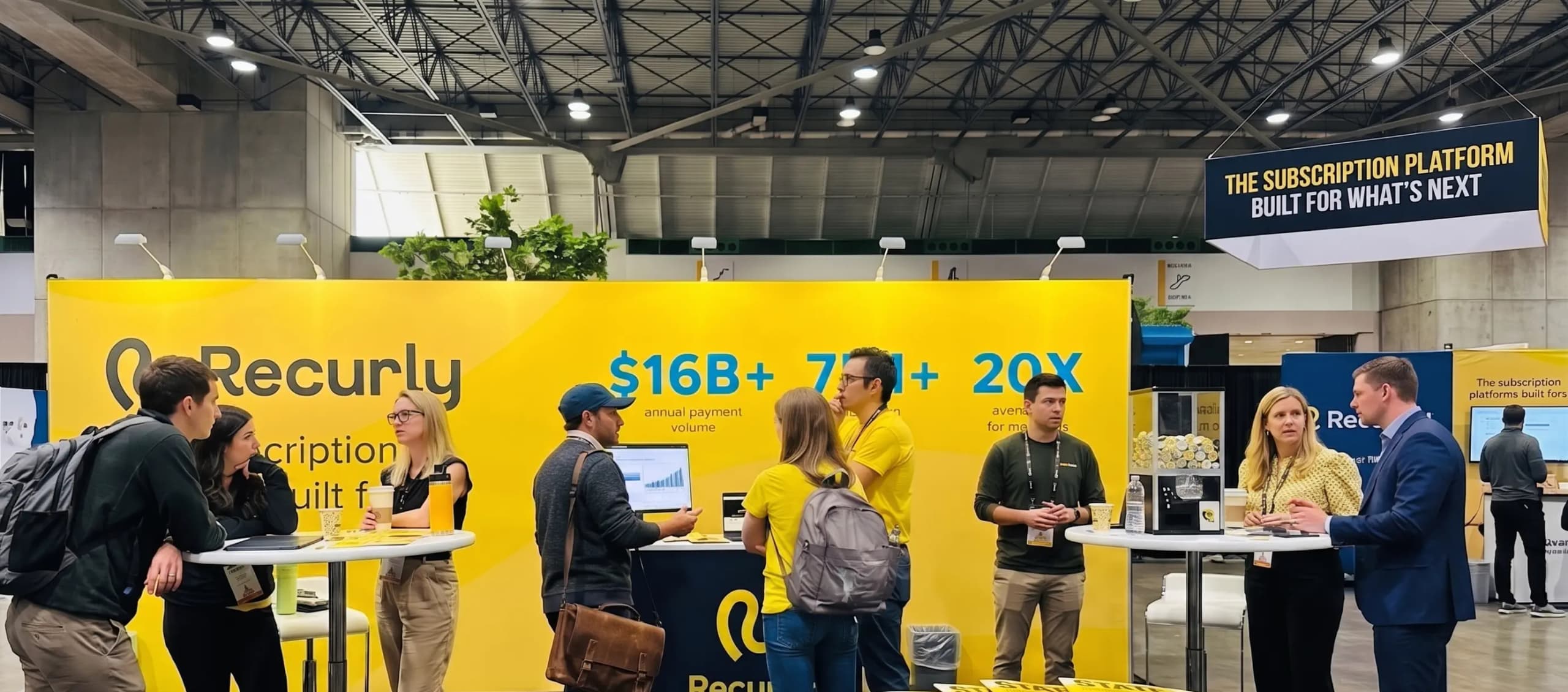
TABLE OF CONTENTS
TOPICS
RELATED POSTS


At SubSummit 2026, one message came through clearly: the subscription economy is evolving fast.
From AI-powered personalization to smarter payment recovery, global expansion, flexible pricing, and new approaches to loyalty, SubSummit highlighted a major shift already underway: the subscription businesses that win next will be the ones that can move faster, operate smarter, and maximize the value of every subscriber relationship.
Key highlights:
The subscriber relationship is cyclical, not linear: Reactivation is becoming the highest-ROI acquisition channel, as roughly 1 in 4 new subscriptions now originates from a previously canceled customer.
Billing agility drives revenue resilience: Winning brands are upgrading to flexible subscription management infrastructure to adjust pricing, models, and plans on the fly.
AI personalizes the subscriber lifecycle: Moving beyond generic templates, platforms are using machine learning for real-time churn prediction and personalized subscriber workflows.
Proactive retention beats reactive offboarding: Offering a flexible "pause before cancel" option often leads subscribers to stay longer, especially as they stack subscriptions together.
Failed payments drain 25% to 50% of bottom-line revenue: Involuntary churn caused by minor transaction failures remains a massive growth gap, highlighting the critical need for automated payment recovery tools.
1. Agility is becoming the new competitive advantage
In a subscription market shaped by AI disruption, shifting consumer behavior, and rising competition, speed matters more than ever.
During Recurly’s session with Chegg, Rahul Desai, CTO of Chegg, described disruption as “a forced invitation to innovate.” That idea captured one of the strongest themes of the conference: businesses can no longer afford systems that slow down decision-making. Pricing changes, promotions, trials, and market-specific experiments need to move at the pace of customer demand, not the pace of engineering backlogs.
For Chegg, simplifying its subscription infrastructure helped business teams move from weeks-long projects to experiments that could happen in hours or days. That shift changed more than operations. It changed how the company makes decisions. Instead of debating which experiments were worth running, teams could test, learn, and adapt quickly.
Practical use cases:
Simplifying the tech stack: Chegg moved away from complex, homegrown systems (likened to a "vintage car" that requires a full pit crew for an oil change) toward composable, standard platforms to allow for faster experimentation and scalability.
Operational efficiency as a byproduct: By fixing underlying infrastructure and removing manual interventions, efficiency became an automatic result of prioritizing speed.
Empirical decision-making: With the ability to run 18+ experiments in a single quarter (compared to a dream of just a few in the past), the Chegg has shifted from being "opinionated" to being "empirical".
2. AI is pushing subscriptions beyond one-size-fits-all
AI was a major theme throughout SubSummit, but the most useful conversations were not about AI as a buzzword. They were about how AI can help brands create more personalized, responsive subscriber experiences.
In the MANSCAPED session, Paul Tran discussed how AI could help subscription businesses move from fixed replenishment cycles to custom frequencies tailored to each customer’s actual needs. Instead of forcing everyone into a 30-day cycle, AI could help brands better understand when customers need more product, when they do not, and how to reduce churn caused by overstocking or poor timing.
That same theme showed up in conversations around retention and customer experience. AI can help identify churn risk, personalize offers, improve cancellation flows, and turn fragmented customer data into actionable insights. But the human element still matters. As the MANSCAPED discussion made clear, AI can support research and process, but strategy, creativity, trust, and differentiation still need human leadership.
Practical use cases:
Custom frequency: AI will allow customers to configure their own subscription cycles, solving the problem of having too much or too little product, which directly reduces churn.
The "know, like, and trust" factor: AI is excellent at research and process-oriented tasks, but it cannot yet replicate the human element of building brand trust or differentiating from competitors strategically.
Low-hanging fruit: For established businesses, using AI to send highly customized, founder-led emails to core communities is a powerful way to increase Lifetime Value (LTV) through better engagement.
Marketing organisms: Fostering community creates word-of-mouth growth, effectively turning customers into a marketing force with a $0 acquisition cost.
3. Retention is moving from reactive to proactive
Retention is no longer just a save offer at the point of cancellation. It is becoming a full-lifecycle strategy that spans pricing, payments, customer experience, engagement, support, and win-back.
Several sessions reinforced the same idea: brands need to intervene earlier and more intelligently. That might mean predicting churn before it happens, using CX data to spot friction, testing personalized retention offers, or giving subscribers more flexible ways to stay.
The FabFitFun session highlighted the “power of the pause” and the importance of giving customers options to build loyalty instead of forcing a binary choice between staying and canceling, especially in the era of “stacking.” The session also emphasized community as infrastructure, positioning engagement not as a nice-to-have but as part of the system that keeps customers connected over time.
Retention is not just about preventing a subscriber from leaving at the final moment. It is about creating enough ongoing value, flexibility, and trust that they have more reasons to stay.
Practical use cases
Massive volume & "stacking": There are currently 556 million streaming subscriptions in the U.S. alone — more than the actual population. Growth is driven by "subscription stacking," with the average household moving from 2.6 streaming services in 2020 to 4.2 in 2024.
The dominance of ad tiers: To keep services affordable while increasing core base prices, major platforms introduced ad-supported tiers. These have grown from 12% of the market in 2020 to 58% of all streaming subscriptions today.
Cyclical churn (the "orbit"): Customer relationships in streaming are cyclical, not linear. 1 in 3 users who cancel an SVOD service return within 12 months. Platforms need to optimize for "the orbit" (reacquisition) rather than just "the box" (retention).
4. Failed payments remain one of the biggest revenue gaps
The New Economics of Subscription Revenue session with Henry Fuz of Stripe, made a compelling case for treating payment recovery as a core growth lever.
Involuntary churn, or passive churn, is often caused by expired cards, insufficient funds, or network errors. These are not customers actively choosing to cancel. They are subscribers who may still want access, but whose payments fail because of preventable friction.
The session noted that passive churn can account for 25% to 50% of total churn in many businesses, making failed payment recovery one of the most important areas for subscription brands to optimize.On average, if you recover a failed monthly payment, that customer will stay for another seven months. This makes investing in recovery (dunning) highly cost-effective compared to acquisition.
Smart retries, card account updater tools, segmentation, and omnichannel dunning communications can help brands recover revenue that would otherwise be lost.
Practical use cases:
Hybrid pricing for upside: Blending subscription and usage-based pricing allows a business to further monetize users as their usage scales.
The duolingo model: Duolingo is a prime example of effective hybrid pricing. They use a classic "Good, Better, Best" premium model, but also a consumption-based "Gems" system to monetize the 95% of users who are on the free tier.
Smart retries vs. static retries: Using machine-learning "Smart retries" to find the optimal time to re-run a card can improve recovered revenue by 10% over a basic static retry schedule.
5. Subscriber relationships are becoming cyclical, not linear
The Roku session on the state of TV streaming subscriptions offered a powerful way to think about modern subscriber behavior: the relationship does not end at cancellation.
Streaming has become one of the clearest examples of a cyclical subscription model. Customers subscribe, cancel, return, switch, bundle, downgrade, and resubscribe. According to the session, one in three people who cancel a streaming service return within 12 months. That means brands need to think beyond acquisition and retention alone. They need to optimize for reactivation and long-term subscriber value.
The session framed this as moving from “optimizing the box” to “optimizing the orbit.” Instead of seeing churn as the end of the relationship, brands should treat it as another moment in the subscriber lifecycle.
In a market where consumers have more options, more subscriptions, and more control, the brands that win will be those that know how to stay relevant before, during, and after a cancellation.
Practical use cases
Growth engines (The three tailwinds):
Household penetration: US penetration has risen from 71% in 2019 to 85% today.
Subscription stacking: Consumers are subscribing to more services at once. The average household rose from 2.6 subscriptions in 2020 to 4.2 in 2024.
Pricing power: The average monthly price of major services has jumped from $10.70 in 2021 to $16.13 today (a 60% increase).
Strategic bundling for retention: Partnering with complementary services to bundle offerings heavily dampens churn volatility and protects subscriber bases from sudden usage drops.
Bifurcated ad-tier pricing: Introducing a lower-priced, ad-supported tier captures price-sensitive users at the top of the funnel while allowing for aggressive price hikes on premium tiers.
The next era of subscription growth is infrastructure-led
If there was one throughline across SubSummit 2026, it was this: sustainable subscription growth depends on the systems behind the subscriber experience.
The brands best positioned for the next era are not just acquiring more customers. They are building the infrastructure to move faster, test smarter, recover revenue, personalize experiences, support global growth, and adapt as customer expectations evolve.
That is the opportunity ahead for subscription businesses. Growth is no longer just about getting more subscribers in the door. It is about maximizing the value of every subscriber relationship, from first sign-up to renewal, recovery, reactivation, and beyond.
Want to learn more about the latest subscription trends? Subscribe to our newsletter and get the most in-depth information on where the industry is headed!



