July 22, 2026
How Chegg rebuilt for speed: Agility, ai, and the future of subscription businesses
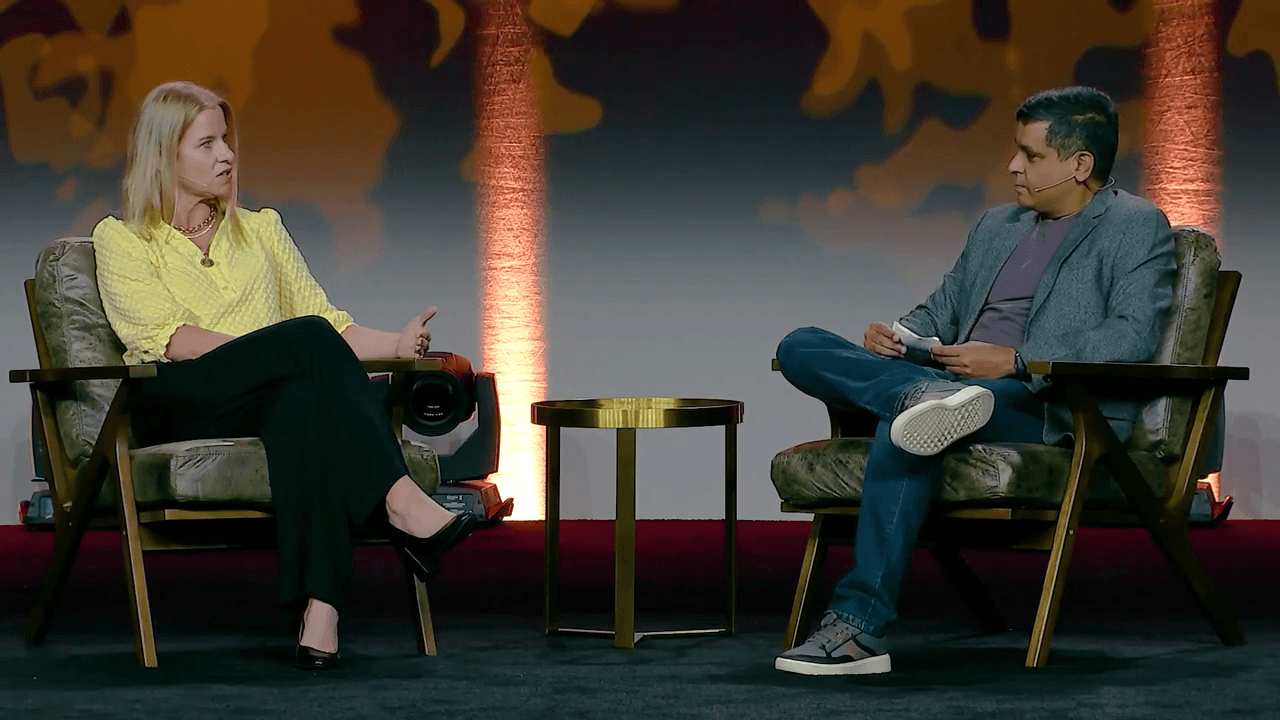
In this session from SubSummit 2025, Recurly Chief Customer Officer Rachel Sharif sits down with Rahul Desai, CTO of Chegg, to dig into how one of edtech's most well-known brands navigated AI disruption, shed a homegrown billing system, and rebuilt for speed.
In this session from SubSummit 2025, Recurly Chief Customer Officer Rachel Sharif sits down with Rahul Desai, CTO of Chegg, to dig into how one of edtech's most well-known brands navigated AI disruption, shed a homegrown billing system, and rebuilt for speed.
Don't mistake the technology shift to be a technology problem. If your industry is disrupted, you know, it's very easy to say, you know, I'm gonna get a bunch of engineers, lock them in a room, and and code our way through it. That's not gonna happen. Right? That's not gonna solve that problem.

I am Rachel Sharif. I am the chief customer officer at Recurly and SubSummit's very, very proud winner of twenty twenty five's best subscription platform.

And I'm thrilled to be on stage with one of Recurly's customers, Rahul Desai, the CTO of Chegg.

I spend a lot of time talking with our customers, and in the past, we mostly talked about what defined subscription success, and that was recurring revenue. We talked a lot about churn, acquisition, retention, but lately I find that my conversations with our customers is changing. We talk a lot about adaptability is really defining success of a subscription business. We talk a lot about experimentation, subscriber experience. Really, the conversation is changing in a very rapidly evolving market, and I know that Chegg is experiencing a lot of change as well.

So I'm excited to dig in to how you guys are navigating those changes. But first, why don't you tell us a little bit about your background and what you do at Chegg?

Absolutely. Thank you, Rachel. Glad to be here. Thanks for inviting me here. And and and this is a great conference. This is my first time here, and it's amazing to see all the brands here talk about what's happening in the market. So it's it's great to be here.

I'm Rahul Desai, CTO at Chegg.

I've been in this industry for, like, twenty seven years now, and for the last seventeen years or so, you know, I had this incredible opportunity to work at Chegg.

You know, I started, when the company was very small, one of the earliest members in the company, and went through the grind. Right? I've seen lots of ups and downs.

At the end of the day, my job has been finding this equilibrium between people, process, and technology, and that has been my thing.

In this age of AI, for sure, it feels like a daunting task.

Yep. We can't have a conversation without mentioning AI. Right? Yeah. Before we jump in, one thing I like to ask all of our customers is, what is one subscription you could not live without?

Yeah. You know, I would have said Netflix, but, you know, I I I changed my mind. It's actually my Costco membership, which which I can't live without. You know, I'm an engineer at heart.

I love the ROI that I can get, and and extreme efficiency is something that I love.

So nothing nothing says they optimize life like a five pound jar of peanut butter and and two dollar pizza slice.

You know, it's it's a dark day in the Sharif household when we run out of our Kirkland brand paper towels. Like, our life revolves around having a paper towel in hand. I've got three kids, and so, you know, you guys might know how I feel. Alright. Well, let's jump into it. You know, you talked a lot about how AI is reshaping the industry. I'd love to hear a little bit more about how you guys are thinking about your subscription business in this day and age of AI.

Yeah. Look, AI didn't just knock the doors on edtech. Edtech is one of the industries which has been affected and disrupted by AI. It didn't just knock on the doors but took the hinges away.

And and Chegg is definitely you know, has felt it, has felt the shift. We were one of the first to feel that shift.

But as I say, you know, disruption is a force in our in our invitation to innovate. So that's what we have been doing. We have been trying to pivot, change our offerings, and adapt to what's required by the students in this age.

AI has not only changed our product, but it has also changed the kind of urgency of everything underneath it. So subscription management systems is part of that. Right?

Sure.

And, We have to be nimble. We have to be agile, and that's what we have realized.

We cannot be in a time when it takes months to change pricing plans, play with prices or promotions.

We need to be extremely fast, and that's something that we have realized. We need to be as fast as students would change their majors these days, right, or change their TikTok profile. That's very important for us. So agility is something that we have been focusing on.

Yeah. And I know we're talking a lot about this at Recurly. How has that changed how you balance efficiency and versus growth?

Yeah. It used to feel like that intention. Right? You can only optimize one or the other.

But what we have realized is if you fix the underlying infrastructure, you have the right composable systems, you know, the efficiency and growth can stop being intentioned.

Right?

We we never we we always focused on agility, we wanted to solve the problems of how we can get to speed, but the the savings through which savings we got through operational efficiency is just a byproduct, in my opinion. Speed is what we have focused on. That's very important for us, but it's it's an added bonus that, you know, we we are able to save.

Yeah. And sometimes with the cost of thinking, you know, Claude code, there's not always as much savings as you would expect. It's because those costs actually compound and can just simply replace what you would spend in other other resources.

What's needed to evolve in your tech stack to support this?

Yeah. I'll say three things.

One is simplicity. It's very hard to keep your architecture simple. Right? I'm sure every technologist in this room can attest to that.

You know, our systems over time had caught caught up a lot of entropy.

It it became so complex. We had so many systems. Every simple change required multiple teams to kind of coordinate the whole dependency management system. Dependencies that we had to manage was descriptive.

It's the complexity did not help with agility that we really wanted. So we've we've consciously spent a lot of time to simplify our architecture. And in the same wins, I would say second thing is, you know, we had to focus on what really matters. Right?

You know, back in the day, we built our own subscription management system. We built our own IAM system. That's not where we know we were adding IP, you know, for ourselves. We were a med tech company.

We needed to focus on learning, and that's where we needed to focus a lot of our energies on.

And, you know, so we had to kind of move away from that and and make sure that, you know, we put all our energies into that. So we folks started focusing on what matters, and that simple that in turn simplified our architecture as well.

Last but not the least, you know, what disrupted us is something that we got to embrace. Right? AI disrupted us, but you can't run a company without AI these days, right, especially in the engineering field. You know?

You can't finish any sentence without a word agent taking it. Right? So that's something that we have embraced. We have been optimizing our product development life cycle on a very tight basis and something that we continue to evolve there.

These are the three things I think definitely changed our architecture and made us agile.

Yeah. So I wanna go back to the homegrown system. Yeah. We actually have a lot of merchants who moved from a homegrown system.

While there might be more customization or a lot of flexibility in that, obviously, that can be expensive. There's a lot of resources. Tell me a little bit more about the constraints that you had that made you decide to go from a homegrown system.

Yeah.

So to be very frank, the system homegrown system that we had built was built for a version of Chegg that didn't exist. Right?

It it basically took everything was an engineering project, like, in the change of pricing, you know, it was an engineering project. You know, I had to put put together an entire team to kind of really, you know, hold the fort and and keep the lights on, not scalable at all. That meant that I had less engineers on things that mattered from building an ad tech company.

It was kind of a imagine this is a vintage car that we own. We loved it because we built it. Yeah. But it always took, like, in a full pit crew to kind of change the oil.

Right? So that was not that was manual, inefficient, and not scalable. So when when a system, you know, starts coming in the way of your business decisions, it slows slows down your business decisions, that's the moment we realize that, you know, we gotta change. You know, we we wanted wanted to change that.

Yeah. So I'm assuming that when you talk about operational efficiency, what it looked like then obviously looks very different today. Tell me a little bit about how that has changed. What does operational efficiency mean today now that you're on more of a platform approach?

Yeah.

So before, efficiency meant heroic effort from engineering teams. Right?

Postal, late night sessions, long days, long weekends. You work through it and get it done. So it it it used to be a heroic kind of an event, but now it's not. Right?

I mean, now we focus on what really matters. You know, the teams are asking the right questions, you know, and focusing on, you know, making sure that, you know, we have automated whatever we needed to took out all the manual interventions, streamlined, removed flare failure points. Now I think it's it's a lot more efficient, and and we can move fast. Right?

You wanna change a plan, pricing plan, you could do it immediately. And and I'm not exaggerating here. You know, it's it's sometimes we do this in hours now. Yeah.

What used to take weeks.

So I think I think this is transformational.

Do you when you think about how you measure that if you know, the operational efficiency, is are those metrics changing just with the pace of how AI is impacting technology? Like, are those metrics ever changing? Are you guys kind of committed to sort of a standard set of industry metrics? Tell me a little bit about that.

Yeah. Look. I mean, within engineering, we have always looked at industry standard metrics.

You know?

We call them the DORA metrics, and we we always measure our efficiency and and our output in terms of those metrics.

That has definitely changed. Right? I mean, because you took away a big portion of work that we were always doing and and started relying on the platform. Right?

So that, you know, kind of you know, lets us be more creative

Increases our creative capacity, and it helps us to make sure that we focus on what matters. There used to be times we always ask questions like, hey. Can we run this pricing plan in this particular market? Can we we change the trial lens to see what happens?

There are always these questions, but they never went anywhere before. Right? But now they do. It's a matter of hours or days to kind of just get it done.

Great. So it sounds like there was a lot of unlock for the business, not just technically, but but from a business standpoint. Tell me a little bit about, you know, what conversations have changed now that you've you've unlocked kind of more capacity to focus on what matters, the business, the driver experience?

So one, you know, we were able to kind of move our engineers off of managing commerce workflows to, you know, how we can engage our users more, focus more on building learning systems, building, you know, what mattered to, you know, to improve the pedagogy behind our learning systems.

So that's one. Alright. The second one is obviously from purely from a commerce perspective, What really helped us is now the business teams can just go in and change prices on their own. We have built self serve service there, and we are able to kind of ask and answer some of the harder questions that, you know, we could never get to before.

So it sounds like you guys are able to experiment a lot more, maybe a little bit more flexibility with thinking about what do your subscribers really want? What do they need?

So we're gonna talk a little bit about growth. If a company wants to grow from a global standpoint, what are some of the influencing factors that you think about or Chegg, you know, thinks about in those decisions?

Chegg has always been a content company.

Right? We we you know, students subscribe to our product primarily to consume content, educational content.

And so, obviously, one thing that we needed to do was translate and make sure that it's applicable to those regions as well. Right? And learning and how educational systems are set up in various different countries is very different and needed to adapt to that. So that's one. Right? But but what we found was the users were organically coming to us, even outside of US back in the day.

They were coming to us.

They were jumping through hoops to subscribe Yeah.

To our product because we never, you know, optimized the commerce flow in the beginning. We thought we optimized the learning system. We're good to go. Right? But it but we were on there.

We needed to get out of the way of the customer and provide, you know, their currencies for that matter. Right? So they would want to pay in their currency, not in US dollars.

So that's that was number one. So that was an unlock.

Then we realized, you know, different regions have different preferred payment methods. That was an unlock for us.

So I think these are the things that, you know, would which definitely open the doors for us and and make sure that, you know, we get out of the way of the customer and help them.

Yeah. I mean, globalization has been a big focus of our own research.

We release the state of subscriptions, which is a research white paper every year, and it really looks at the data across all of our merchants. We have a lot of merchants who have global businesses, and we're finding just those behavior changes are pretty evident as you look at everything from decline rates on bank type payments versus a wallet payment.

We found, for example, that in Europe, wallet based payments, alternative payments actually perform a lot better than some of typical banking backed payment methods.

India is a good example as well where UPI is something that everybody uses there, and if we don't provide that, both from you know, we lose customers because of the lack of support of payment methods and also from a regulatory perspective. Yeah. Because, you know, you it's highly regulated from how subscriptions work in India.

Yep. Great. If anybody wants to see that research, we do have a printed out version of it on our booth. It's really interesting stuff, looking at the data across all of our customer base.

One of the themes we consistently hear is the importance experimentation, and I talked a little bit about that whenever we kicked that off. That's just something that our merchants are really trying to understand how other merchants are experimenting across a lot of different factors.

What's changed in your ability to test things like pricing, trials, promotions?

Yeah. Yeah. No. It it it has been night and day.

Before, experiment running an experiment would mean an engineering project. We would scope it, plan it, you know, figure out all the dependencies among teams, execute, test, launch. Right? And by that time, the moment you wanted to capture would have been passed. Right? So you you lose the moment.

But now, you know, we are able to do that in hours or days. Right? And and and as I said before, business teams can self serve themselves to go run these experiments as well. So I think that I think that has been a big shift for us.

So voice of customer is really important from my point of view. I spend a lot of time understanding, like, what do our customers need from us to help support their businesses? How as the CTO of Chegg, how do you take the voice of your customers through these experiments, through, you know, how your customers respond to different types of things like trials and promotions? How does the engineering org absorb that voice of customer?

Yeah. No. I mean, I think at the end of the day, we need to focus on outcomes. Right?

It's it's all about the bottom line at the end of the day.

And engineering teams who kind of focus on commerce as well, and so that's that's all they're working on.

And and as I said before, it's a very fast moving world these days, and students are changing very, very quickly. A new generation is coming in almost every few years.

And the way they work is very, very different. Right? And we need to adapt. And if we have to adapt, you know, experimentation is extremely key.

Right? We don't know what's gonna work. So from an engineering perspective, it's it's all about how fast can you go. At the end of the day, it's agility that that matters the most.

How fast can we go? How many experiments can you run fast? So and so forth. Just to give you an example, just this quarter, January and February are, like, our acquisition months, we were able to run close to eighteen experiments.

Wow.

Right? And that used to that used to be a dream before. We we would take a couple of quarters to to get through those kind of experiments. That gives us the kind of insights into where things are going, what's working, what's not, and and basically adjust very, very quickly.

And so I think at the end of the day, that agility is is most important from an engineering perspective.

So I know we used to talk about the pace of change from a technology standpoint from, like, a year's perspective. I feel like now it's like the world has changed in six months. Right? So tell me a little bit about what you guys can do now that just simply wasn't possible before.

Yeah.

You name it, right? I mean, we always wanted to run an experiment and see what kind of trial lens work in different regions, for example. You know, our marketing team thinks about thinks up a promotion in a particular region, and they can, like, launch it the same day if they have to do that.

It's it's, again, it's the speed at which we, you know, we are able to do things is is what is transformational for us. Sure.

And how has that speed changed the way you guys make decisions on the business?

Yeah. Look, that's where I think the big difference is. You know, we we definitely have become more empirical than opinionated.

What I mean by that is, you know, back in the day when it was hard and it was expensive to run these experiments, we used to debate about which ones to run. Right? We had to prioritize the experiments and and run the ones that really matter. But now we don't have to debate. We just run them. Right? And and that's that's the shift that that, you know, we can see that, you know, with with agility that we we have gotten.

Sure. Sure. Alright. Let's get out our crystal balls.

As you look ahead, where are you focusing next to continue evolving the business?

Yeah. Our next focus is gonna be all around skilling.

We we are gonna be, you know, figuring on the d two c c side, you know, we are gonna be focusing a lot on helping students get their first jobs and get through their interviews and and make sure that they're skilled to succeed in these in these jobs. So that's that's where we are focusing on.

We also have our skilling business, language learning business.

You know, we wanna grow them, you know, from a b to b side of things.

So it's gonna be a lot of focus on skilling.

Yeah. Yeah. I would assume that there's a lot of fear from your students coming into the workplace or even education. Like, I have a kiddo who's gonna be thinking about going to university soon.

And, you know, how do you guys make sure that you're building that confidence, you know, going into this new world? Exactly.

And and it's not just the students anymore. Right? Even people who are working these days, they want to upskill. Every company is investing and figuring out how to upskill their employees. So I think this is scaling is something that there is a lot of demand for at this point.

So if we talk about scale in general, when you guys think about scale at Chegg, are you thinking more about expansion optimization or adapting to changing demand?

I would say all three. Right? Why why stop at one?

Yeah. It's look, I mean, we are expanding, for sure, on the b to b side for the scaling businesses.

On the direct to consumer side, we are focusing on bringing in efficiencies. So it's it's a lot of optimization efforts that is going on.

Obviously, you know, it's a much bigger business for us. It generates cash, which we can, you know, start investing into our other businesses. So I think it's it's all about optimization. But at the end of the day, we are also adapting very, very rapidly in our user experience, you know, in this a in in this in this world, which is changing Yeah. You know, very, very fast with AI.

Alright. And where do you see the next constraint emerging?

That's a great question. I don't think it's gonna be a technology constraint. Technology is not gonna be a constraint. And in fact, it has raised the bar and opened up the doors to do a lot more things than before.

I think the next constraint is going to be in the area of human unlearning.

What has worked for us in the past is not going to work for us.

It's it's all about the constraint is all those all about, you know, how fast we can change people and process. Right? How people can adapt this and how processes can be adopted.

You know, what gave us the edge in the past is not going to do the same. Right? Because the technology has raised the bar. We have everybody else has to adapt to it. So I think that human unlearning is going to be the constraint, in my opinion.

You know, it's funny we come full circle. We were talking about the need for technology adaptability, but really now it's how humans are gonna adapt to these shifts in technology. Alright. I have one final question.

For leaders who are navigating the similar challenges, whether it's AI, whether it's your market is shifting or evolving really rapidly, what advice would you give?

That's a good one.

If if I have to boil down to one thing, I would say this. Don't mistake the technology shift to be a technology problem. If your industry is disrupted, you know, it's very easy to say, you know, I'm gonna get a bunch of engineers, lock them in a room, and and code our way through it. That's not gonna happen. Right? That's not gonna solve that problem.

As I said before, we always need to find the equilibrium between people, process, and technology, and every time there is a shift in one of them, right, people can change. Right? I mean, every every new generation is different. When that happens, technology and and process need to get adjusted. Now AI has disrupted the technology and and raised the bar, so everybody else has to adjust. Right?

And, again, as as a leader, you know, if you are a leader in your company, you have to start continuing to figure out how to get to that equilibrium because it is it is kind of out of whack right now.

The second thing I would say is there needs to be an uncompromising focus on creating differentiation.

Again, with AI, anybody can wipe code your solution, you know, what you have built as a product. They can wipe code and and and compete with you. Right? So technology is not a problem. So it's it's it's very important to keep keep your focus on on creating that USP, if you will. Right?

So focus on what matters. Sure.

On a lighter note, AI can do a lot of things these days, but they kind of want do one thing. You know, it can't take the blame for a misquotter.

And that is still a privilege that leadership owns. Sure. Right? So at the end of the day, think it's all about finding this new balance in the new world.

Great. Well, thank you. Thank you, Rahul, for joining us on stage. I do think, you know, we are all facing similar challenges, and appreciate the advice and the detail that you gave about how you guys are standing up to those challenges. So thank you all.

Thank you. Thank you all.
What you'll hear:
Chegg moved off a homegrown subscription management system that required full engineering teams to execute even basic pricing changes. After switching to a platform approach with Recurly, the business went from multi-week engineering projects to same-day launches — and ran 18 pricing and promotional experiments in a single quarter.
Rahul frames the core lesson plainly: the constraint was never technology. It was people and processes catching up to what technology made possible. His advice for leaders navigating disruption: don't mistake a market shift for a technology problem, and never lose focus on the differentiation that actually matters to your customers.
Key themes covered:
- Why subscription agility — not just recurring revenue — defines success today
- The real cost of a homegrown billing system (and what unlocked growth after leaving it behind)
- How Chegg went from opinionated decisions to empirical ones by making experimentation fast and cheap
- Global expansion: localizing payment methods, currencies, and subscription flows for international markets
- What Rahul calls "human unlearning" — the next constraint for AI-era companies
Chegg moved off a homegrown subscription management system that required full engineering teams to execute even basic pricing changes. After switching to a platform approach with Recurly, the business went from multi-week engineering projects to same-day launches — and ran 18 pricing and promotional experiments in a single quarter.
Rahul frames the core lesson plainly: the constraint was never technology. It was people and processes catching up to what technology made possible. His advice for leaders navigating disruption: don't mistake a market shift for a technology problem, and never lose focus on the differentiation that actually matters to your customers.
Key themes covered:
Why subscription agility — not just recurring revenue — defines success today
The real cost of a homegrown billing system (and what unlocked growth after leaving it behind)
How Chegg went from opinionated decisions to empirical ones by making experimentation fast and cheap
Global expansion: localizing payment methods, currencies, and subscription flows for international markets
What Rahul calls "human unlearning" — the next constraint for AI-era companies



