CASE STUDY
Smallpdf’s scaling crossroads: How one product team rebuilt growth by letting go

TABLE OF CONTENTS

Founded in Switzerland in 2013 with a single PDF compression tool, Smallpdf has since expanded to offer over 30 PDF tools for millions of users worldwide. But when revenues tripled overnight due to hyper-growth, the company faced a hidden cost: a homegrown billing system held together by shortcuts and a single engineer.

“Our billing stack just wasn’t built for what came after COVID,” recalls Stéphane Turquay, Product Manager at Smallpdf. “We suddenly had millions more users, more disputes, more failed payments—and almost no visibility into what was happening.”
It was a turning point. The company could no longer afford to scale an in-house system that was never designed for global demand. And they certainly couldn’t pause product development—Smallpdf competes in one of the most crowded software categories online.
The answer was clear: they needed experts to handle billing so the team could stay focused on the product.
The case for letting go
Smallpdf’s original billing setup was scrappy and resourceful—perfect for a startup, but fragile under the weight of millions of users. The system lacked monitoring, couldn’t support new payment methods, and buckled under load. Leadership wanted a multi-gateway strategy to reduce risk and improve global performance, but building it internally would have derailed their roadmap for months.
“We needed to keep innovating,” Stéphane explains. “There was no world where we stopped shipping products to rebuild core billing. Recurly changed the equation.”
Going global — without slowing down
Recurly gave Smallpdf something priceless: speed. With native gateway integrations and flexible configuration, the team could scale their payment strategy without relying heavily on engineering.

Launching new gateways became almost plug-and-play. Geo-pricing went from “someday” to “live” in a matter of weeks. Local payment methods unlocked markets they’d struggled to monetize. In China, enabling AliPay through Recurly and Stripe triggered a dramatic spike in conversion—revenues quadrupled in just four months because users who wanted to pay finally could.
“Very quickly, we realized this wasn’t just resiliency,” Stéphane says. “It was revenue acceleration.”
Fixing what they didn’t know was broken
Before partnering with Recurly, Smallpdf didn’t have a dunning strategy at all. Failed payments simply meant lost customers. Recurly helped them design a structured, automated recovery flow—and the results were transformative.
They’ve significantly improved recovery of failed renewal payments, turning what was once lost revenue into a consistent, automated growth driver. Now, revenue that once slipped through the cracks is captured seamlessly in the background.
Recurly’s dashboards also shed light on opportunities the team didn’t know they had. Data exposed friction in the cancellation flow, prompting Smallpdf to redesign the experience and introduce retention offers like smart discounts—improvements they could launch without writing custom code.
Elevating product-led growth without sacrificing control
As a deeply product-led company, Smallpdf prioritizes simplicity and a seamless user experience. But frictionless onboarding can backfire when users don’t fully realize they’re entering a subscription.
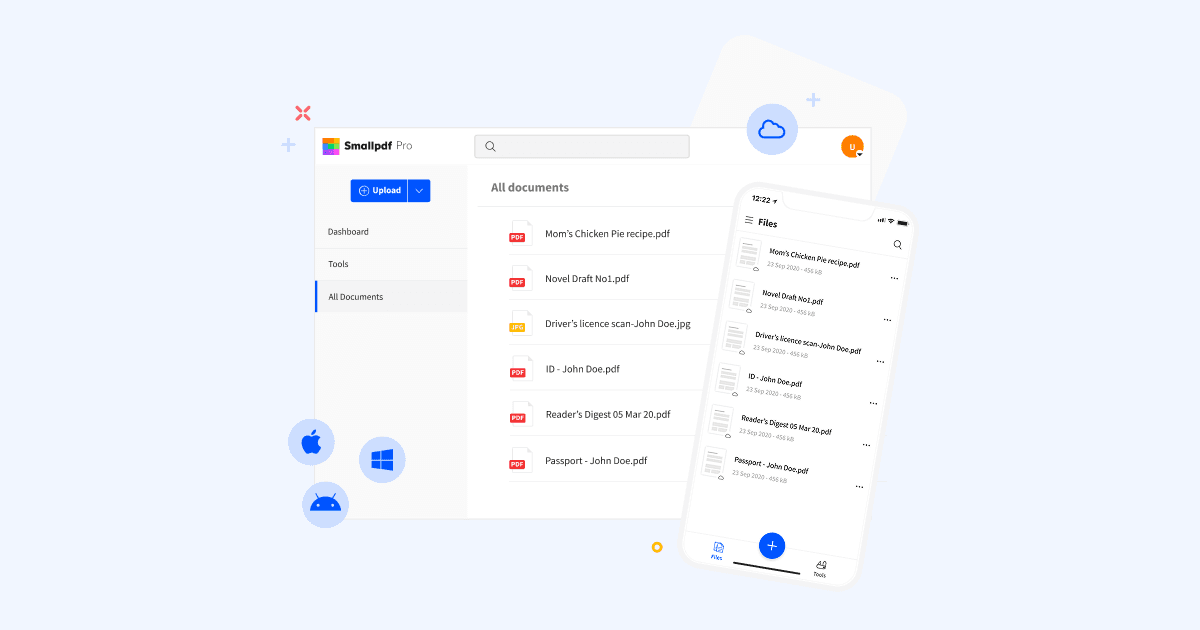
Recurly helped strike the right balance. Its configurable checkout, clean UI, and flexible account management tools allowed Smallpdf to maintain PLG ease while reinforcing clarity, compliance, and trust.
And as Smallpdf explores AI-powered workflows and a potential move upmarket, Recurly continues to provide the foundation: invoice billing, credit-based pricing, enterprise payment methods, and easy experimentation across plans and regions.
A partnership that extends beyond the platform
For Stéphane, the biggest impact wasn’t just the tech—it was the relationship. Meeting the Recurly team in person deepened the collaboration and opened the door to shared ideas, insights, and real-world best practices pulled from hundreds of other subscription businesses.
“They bring us strategies we hadn’t considered—from improving cancellation flows to upgrading monthly subscribers to annual plans,” he says. “It feels like a true partnership.”



