Customer story
From DIY to 515% ROI:
Findmypast’s digital transformation with Recurly
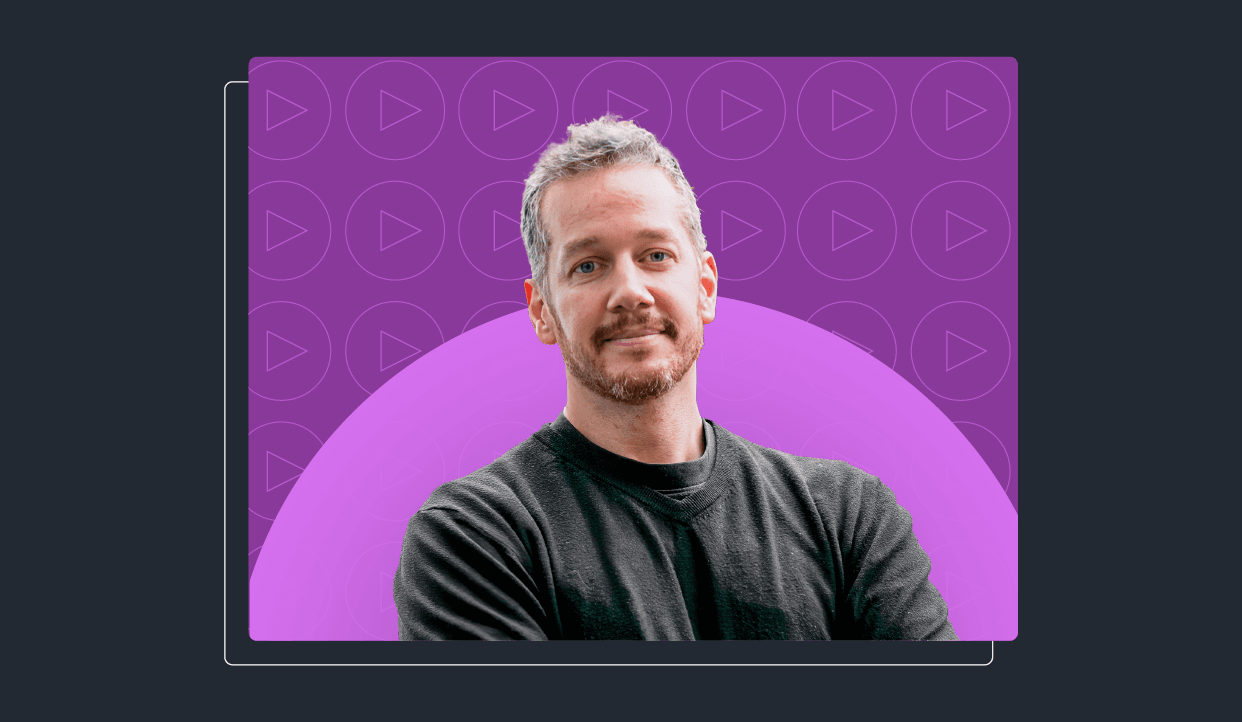
TABLE OF CONTENTS
I'm Greg Jenkins. I'm, head of product to find my past. I've been with the company for about three years.

I originally come from a telco background. So I used to work in telco, running e commerce, teams, and loyalty platforms. I work with, by my past, which is a, bounty genealogy site, and, with a vision to connect, people to their past. We've gotten billions of records dating back as far as sixteen, fifteen thousand, and and they've got so much history tucked away into them and stories that, that we're building technology to surface them for people, people to to really discover their their past and where they're from. We we would purify my past goal was to move away from just, just selling records, being just a one off transaction where you come in, you buy record, and then you then you head off again.

And we wanted to to shift our shift our the way we we model ourselves away from just being that transactional side to, to actually building AS service, but actually moving to more of an experience, and where subscription comes in is actually is to build that value behind, behind our service. We do more than just provide you the record what we actually do is we do a lot of the, leg work in the background. We've got a lot of great technology to surface that information up, and and it's more than just doing that, the one I've action with us. We want to grow, grow that story with you, and we'll be on a part of it. And that's what subscription is about, it's about building value behind, behind the Paywall and, any building that building, I guess, building that relationship with the customer. And that was, that's what enables us to do, and What we're trying to do, is build that, that ongoing value that you can book behind.

Behind those stories, that people actually see what they're they're getting from it. It kind of gives a, it gives us a bit more focus on what matters.

Whereas if you if you what what you get much from a transactional one off transaction business is you have a one off ship. Kind of retail slightly where you go when you buy a top, they walk out the store again. With a subscription, actually, once they're in, The biggest part is that retention, but the biggest part is that you're subscribing and as part of the subscription is building up everything that you build on, everything that our product teams are working on is building the value behind these customers that are investing in it, and and we're trying to give them that value that they they expect from us.

And the subscription model kind of drives that thought process and drives that business model across the whole business away from that, they're just here to buy a record. Actually, no, we're here to really build them and and and get them to that end goal and get them to that to their lifetime value that they can deliver with us. The question of whether whether to build or buy, I think when I when I drew when I drew it out, this is this is probably towards the end process. So, I think I've spoken very much about the, the idea that you, you start with the problems that you have.

When you get right to the end, you allow all the customer problems and you know why you're looking for the solution, right at the end, you get to that point where you kind of go, Rob, what we, what do we do now? Do do we, do we rebuy?

Do we do we build something ourselves again? Do we do build on what we've got?

Or do we go for something different? I think that what closed it offers is I drew a diagram, much of a draw, and I drew a diagram on all the elements that are involved in it.

And so, and when you start doing that, you start looking at different infrastructure you need, around compliance, partner management, so the different payment gateways you have, security, PSI compliance, have we got that kind of resource that understands it that knows it? Do we have the ability to quickly flex up when there's new compliance changes who's gonna be reading up on compliance changes required?

Who's gonna be, looking at the different way that you can, move card payments and, being able to update carpet as well. There's there's a whole element, and and how do you then also provide the elasticity behind it? So for example, a new technology open banking comes along. Well, guess what? We're gonna have to have someone who specializes in that, and we're gonna have to recruit them.

Very quickly, in one slide, you kind of say there's a huge gap. So it's not just about whether we buy it or not now is actually do we, do we, or do we resource an entire new department, who's gonna be able to deliver this for us? And that kind of quickly answers the question, kind of, no, thanks. We'd rather resource an entire development to, to build out some new functionality that sells another area they want to focus on.

So that that that was closed down quite quickly, because, it wasn't just a case of using our engineering team that we had that was building it to rebuild actually, if we want to do it right, there's an entire infrastructure that we need to get there. And the likes of, the likes of Recurly when you go down to, their infrastructure is there, you know, there is that, There is the the partnership managers who who have the relationship with the payment gateway. That's already there. We don't need to worry about that.

There's, you know, we get sent at the dates about compliance changes that are happening. What do we need about? Don't worry. We've got it undercover.

And that's exactly what we need. Now as part of the decision to go that route. As well. I guess the same way, I always use the analogy of cars.

Yeah. So, you have two choices. You can buy yourself your car and go down and have it serviced by the dealership and get it all sorted, or you can buy yourself a kit car or a car from scratch and try to build it yourself, but you're gonna, you're gonna need to learn how to be engineer, mechanic, learn about engines, learn about, and if you've got the time and resource to do that and you really wanna do that great on you, but, that a very small majority of people who'll probably really want to go down that road. Where we've seen the biggest benefit, I guess, for a customer, is anything to do with changing the type of subscription my now.

And that came from anything from, as I mentioned from the free trial going for an upgrade, downgrading, being able to change, being able to, we've just we launched the nineteen twenty one census, which wasn't within the subscription.

So that was an additional add on. I mean, gosh, being able to have built that without recurly would have been a nut and nightmare, and the logic of having a subscription, but then also of pending another appointment and everything from, that one click purchase is now possible. So the customer being able to be part subscription going, I want this record. This looks really interesting.

And within within a clerk, they've got it. We're not asking them to reboot a payment, which we used to, for full credit, we used to have to put another card payment, another payment. We didn't have wallet. We didn't have so actually that one big claimant was something that was that didn't exist. And actually what we thought might have been a huge friction of in reducing nineteen twenty one census as an additional add on where we're like, oh, they're gonna they're gonna have to reboot the card details in. It's gonna be friction. That's gonna impact the customer's journey.

Wasn't and actually was hugely successful, and and we managed to introduce an entire new business model on top of it as an add on with just a for the customer. So, well, look really big and technical for us is a big challenge in the background, but a customer was like a click.

And I think that's where that kind of difference was really huge.

For us, and I think a year ago, two years ago, without recurring, our customer center would have been absolutely pummeled with calls coming in going, I've tried to pay for this. It's not working, or I've I've put in a car detail in to do this. In some reason, my subscription stopped, but I've now got this record. How do I, and it was, yeah, it was just our confusion because we didn't have the elasticity to be able to go.

Let's add an add on because if we did that, something would break down the chain, and and we were able to do that. It gave us a small flex boost, which is complex for us and mentally to kind of put it around the back of our head going right. This person's got subscription, and we're gonna add on to it as a as a new, you can only see this record view then becomes yours. The complexity is really, but actually benefit is on the front side, for the customer, it's even simpler.

And I think that that's that's the win there is though it seems complex from what we're talking about. And by complex, I mean, for what, yeah, from the customer point of view, it's that golden thing, you know, the Apple thing to how simple can you make it? The the biggest difficulty is how simple can you make it? And that that's that's what we're trying to achieve with it.

It's a huge thing. We've got an international press survey. You know, we've got huge audio is our volumes wave skyrocketing, and it's gotta be simple. You don't want people calling in, and heaves kind of going, I don't understand, or how do I do it, and we did, and, and that was, that was the success of that story.

What recurly is added to, to our able structure is provided a separation, a separation between some of our core other core stack areas. So what we used to And it's quite funny when we started this project, I named it the heart transplant.

Yeah. And the reason why is because, everything was built into one one database. And so everything from payments to to whether you'd seen your your the record that you bought from us or, and whether what royalty we were paying out at the back of it is all built into this big stack.

And so then then we had to overrate on top of that the idea that there was a such subscriptions to have you made that payment. And and so, part of this is gonna be a heart transplant. We're gonna we're gonna pull this out, and we're gonna put a new platform, which is not gonna be built what it's gonna do is gonna be able to orchestrate it.

And, that's it's it's removed that entire complex heart that we used to have at the center of our business to, to suddenly, into something that's become a much more elasticated. It's enabled us to turn around and say, actually, we're gonna, we're gonna introduce a new subscription because there's there's a new opportunity here without impacting the rest of the stack, without impacting the fulfillment, because it automatically recognized it's a new subscription, it's got new ID, and it it it does that. And, whereas before everything was was hard coded in, and I think it's it's not necessarily completed. What it's done is enabled us to do more around the outside of it.

We we put a, we've got something which we've, a gateway, which we've got between our other products, and it it really does allow just that flexibility for us to do. So now anything we do around our subscriptions, whether it's some new functionality, like ramp, which is something we're looking at at the moment.

I don't have to worry too much about downstream events because I know it all comes through in the same way. So I can suddenly flip up a new type of subscription, flip up a new model, and it'll pass through.

Successfully because everything else has been, separation of concerns. Yeah, it started to provide the ability to to do that for us. And I think that's where, that that's where the benefit is for us usually. It's just removing that kind of dependency of saying if we pull this out. I mean, it's like a pickup sticks, you know, and that's what used to be. It used to be kind of going, oh, I need that stick there. And as you pulled, everything moved, and you're like, no.

And so it's really done that. It's allowed us to kind of have thing where the sticks are aligned nicely, you know, and I'll take this up. That's fine. It's still nice, nicely.

And it's just, just given us that flexibility. And also, we don't have to worry about it too much. If something, you know, there's in the rare occasion, if something we're not sure about, we pick up the corner. And it's fixed, and we don't have to worry about taking the entire design team to or engineering team to fix it.

We're looking forward to what can we do? You know, we're in a we're in a place where at the moment where where everything's changing, constantly changing, the economy, the, the the available, the available available funds people have to be able to buy subscriptions, and, and you have to wrap it to be able to change. Accommodate, you know, we've been through Panda, going through a cost economy, going through, different types of payments, you know, we'll come to open banking, we're going to card payments, going to PayPal, Apple Pay. It's constantly changing.

And you you need the flexibility just to, to have the time to look ahead, to have the time to look what markets are doing, look what, you know, look what the future's holding, you want to go as a business, rather than spending all your time going, how do we, how do we fix what's there now and how do we optimize what actually it's given a lot more time now where we're actually spending a lot more time kind of going, this is what we want to do, without panicking going, oh, we can't do that. It's gonna take months. Can you imagine? Can you imagine that the game of Domino's there?

So, yeah, you do have a lot more flexibility around it. Great, Kramer, creating a business case as to why you should really invest in a new platform, there's, a, what was critical for me was to, to make sure I actually approached from a customer problem first. And, where we spend our time a lot was, we're we're starting to build out different pockets across the business we knew there was customer friction. And whether that be, for example, I mentioned the upgrading, the free childing people having to break break their, break their subscription and cancel and delete it through to reinstall in.

All these stories you kind of heard down the way, and what we honestly do is build up just document more. And we kind of built out pockets themes within there. So for example, free trial experience, or in life experience, or billing experiences, and and just kind of pocket them up, and we started doing interviews, both a lot of time with the CS team, customer support team just kind of understanding where the problems were, what people are complaining about. They did a great effort of tagging all the calls that were coming in so we could have really trying to track down what what problems they're having and issues.

Yeah, we we had we had about one hundred and five, one hundred and seven problems, but actually what made the what made the case really good is actually, eighty percent of those were were customer problems, and actually there are frictions which we we had in our platform, which we were kind of oblivious to, what we knew about, but because, our focus wasn't in that kind of space, in the subscription space. We're really focused on on building, building acquisition flow, building up a product sustained separately. The subscription was kind of second, second, and as part of the experience, we wanted to try to improve that friction.

And so We build out these themes. As I mentioned, yeah, we came, we came with these sixty nine ones, which are really quite powerful ones, which which resonated. It's kind of ones where you can sit in a boardroom and you tell the story, and people across the room are like, oh, and and it those are the ones which are really powerful. And and, so we created them.

And I think in every single one of those teams, we probably had one of those that you where we brought up to kind of say that this is the existing experience today.

To kind of explain, this is not just a technical problem. This is actually something that's experiencing that our customers are experienced on a day to day basis, and that our CS team are having to deal with, which, which offer platform shouldn't happen nowadays if you if you use you use a a company, like, regardless, that doesn't mean this shouldn't happen. These are these are past problems that don't don't happen.

So we did lots of research around there. We didn't have as much data as we wanted to. Because, obviously, this is this is a product that we built. This is it been stacked over years.

The insight wasn't as well. So, you know, we have to use raw data, you know, so going into our payment providers and exporting CSV files, kind of, to kind of see what the failure rates were and see what the cards were and put them onto an Excel spreadsheet and build up pivot tables. And, you know, so, so there's a quite a lot of effort around that kind of, to kind of build out the business case behind. And then, of course, we have some journeys as well where we start to look around the subscription journeys, look at where people were dropping off, and starting to put surveys around those based as to why why were you leaving? Or, and each one had a different different theme and a different context behind it.

And then enable us to kind of come back to the, to the board and really kind of say, this is where the value is going to come from. Yes, there is some revenue return. Brilliant. That's that's the benefit, but actually, it's more to do with the problems that we're currently giving our customers as they come through.

And I think that was a powerful, that was a powerful took through. And it made it made the the whole, the whole process much easier. And also gave something to give to our engineers, which, which is great because time we got to the engineers, and we say, right, these are the things we're solving. What we're not solving is the bad code.

What we're not solving is a code of someone who built something, but they're not with the company anymore. What we're not solving is, is a technology stack problem that we have. What we're solving is these real life problems that our customers experiencing.

Because if we remove those customers, they're actually gonna achieve what they come here to do much, much better. And the success rate will go And that, and no one has a knock on impact. That's where you knock an impact on your monthly recurring revenue, on your, and so that kind of sells itself off.

So out of the the sixty nine problems we had, we we solved, it's been a year, a year, almost that we've been there. And we've solved fifty eight of those problems. And the other ones are are more to do actually, the remaining ones that we had are more to do with with things, for example, there's new payment providers we want to start to work with to identify for example, you know, our mobile usage has grown from from forty eight percent to almost sixty five percent. And and those are the kind of problems yet that that we want to work with. It's not necessary that that we haven't, you know, there's contracts to build. There's a right payment provided to work with, and those are things we're starting to work with.

But the other ones with school and such are really fun. And I think, that that's something that we we've now solved with with those fifty eight issues.

We had, we had a system that didn't, didn't really, provide any reasoning or or any kind of, trying to find the word, but it just it it wasn't a seamless experience.

So, you know, I'll use the analogy of cars again, you know, so, the analogy of a car is when you, you know, when you're driving along and you get that engine light that comes up. You know, you have no, you have no inkling to what it is. The immediate thing that comes to your head is, wow, money. I'm, I'm, it's gonna cost me.

And you, and you think, I have no idea what it should cost. I have no idea what the problem is. I have no idea, but actually the technology exists there to be able to tell you, you know, that there is they can give you an indication from they would be able to surface, for example. You know, it's a sensor chance.

So it might cost you about sixty quid. I'm gonna, you know, but we'll need you in to come and investigate. Oh, they don't. Shall up a red light.

And you look in the book and it says that there's an engine, you know, engine problem. You're like, oh my gosh, a new engine, or you have no indication. And that's similar to, to the, to how the dunning management works for us. It's really, to be able to turn around and say, we used to have the system where it just go.

You've not paid.

Which suddenly brings up anxiety in the customers, you know, it's going, you've not paid. Well, why? What? What?

What's going on? You know, and it brings up an anxiety and it really brings up a negative connotation for company. So now being able to go, by the way, you know, your card's expired. It's a simple process.

All you need to do is just click this button, go in, and you can update your card. Or better still, card updater. You know, it's been done. You didn't have to do anything.

We've updated the card because we know you've been sent a new card by the bank. It's automatically been related to the bank. We've got information.

So everything is communicated to the company, to the, to the customer with a call to action, do this. And none of that was there. So we've gone, yeah, so that small change has driven, a six percent, six percent improvement in that recovery rate off the back of a dunning.

Six percent is not as big as some of the numbers you might have thought, but actually six percent is huge for us because, the recovery rate come that came in much before they even now fail. Know, the expiry comes before they even default the upgrade, card update to happens before they even default. So that that six percent is just the remaining people who we've not been able to capture behind. So, that's compounded. And we recently done an experiment actually just to start to play around with how long that donening process should be. And over the last couple of months, I think we've grown it by another five percent recovery rate.

When we talk about the benefit, we've got, I guess, from, from a platform like Recurling, have it, I mean, put it in, there's, yeah, number one is the cus is you look at the custom benefits that we we've spoken about the the fifty eight customer problems we sold out at the fifty nine. And as you start to go down all the things that you benefit you get to that wonderful bottom line of, you know, how's the investment that we've been we've invested in? Has that been paid back off? And I think for our business, we we were we had a platform that really wasn't given us the experience that we wanted to. We had all problems that are being encountered by our customers. And so, so yeah, so there was this, there's an awesome opportunity that we saw at the end of it. Once we'd addressed all these problems that we kind of reflected back on what being achieved, you know, dropping off failure rate by twelve percent, done an improvement by, by now almost eleven percent.

The benefit of the back is, you know, we've seen almost what five hundred percent, return of investment.

And and that's A large part just for quite how tough and challenging things were as well, but now also the fact that we have that flexibility to be able to do things quite easy. And it's really given us that that flexibility to expand and contract, different options and opportunities for our business.
A genealogy website based in London, Findmypast is dedicated to helping families find long-lost stories and reviving precious memories. At its beginning, Findmypast’s only service was helping its customers locate records–a one-time purchase. But the digitization of records has made Greg Jenkins, Head of Product at Findmypast, realize that the business must change with the times and do more to stay competitive.
Read more to hear Jenkins’ story about his journey with Recurly and how he helped Findmypast evolve from a technologically outdated company to a seamless recurring revenue business that builds ongoing value for its subscribers.
The problem
Working backward, Jenkins quickly realized the majority of the issues Findmypast faced stemmed from the customer experience. From payment options to subscription plan adjustments, the homegrown technology Findmypast was using was limited in what it could provide to its subscribers, negatively impacting overall business performance and unjustly placing a heavy burden on the customer care team. Jenkins knew the team needed better resources and more support. So, the question arose, “Do we buy or build [a subscription solution] ourselves again?”
The evaluation
Quickly, Jenkins outlined every element involved in a reliable and scalable subscription management and recurring billing solution. He discovered the need for an entirely different infrastructure from Findmypast’s current system, including security and compliance demands, partner management, payment gateways, and more. Evaluating business resources, Jenkins wondered:
Do we have the resources that truly understand everything we need?
Do we have the ability to quickly flex up when there are new compliance changes? Who is going to be reading up on the changes that are required?
Who is going to be looking at the different ways you can move card payments and be able to update and complete that?
When you start looking at the infrastructure you need, it makes you question if you have the resources necessary to quickly flex up when there are changes. It’s better to have someone that delivers that to you instead of resourcing a whole new department. You can focus in other areas of your business.

Greg Jenkins
Head of Product
And the biggest question is, “How do you provide elasticity behind it?” The ability to anticipate all the needs and changes to come was a hefty consideration for Jenkins, who knew dedicating an entire team to maintenance and scalability was unrealistic.
The process
More than having all the resources, Jenkins knew he needed to be able to build an entire subscription management and recurring billing infrastructure well and accurately. With Recurly, everything was already available with a team of subject matter experts to make necessary changes. For example, Jenkins appreciates having partnership managers who have relationships with payment gateways, and he can relax knowing they’ll automatically implement updates regarding compliance changes.
[Subscriptions are] constantly changing, and you need the flexibility to have the time to look ahead, look at what markets are doing, look at what the future’s holding, look where you want to go as a business–rather than spending all your time going, ‘How do we fix what’s there now and how do we optimize?’
Greg Jenkins
Head of Product
Deemed “the heart transplant,” the transition from Findmypast’s archaic homegrown solution to Recurly enabled the company to take on new opportunities without impacting the rest of the business. With more flexibility than ever before, Jenkins and the Findmypast team can now spend more time thinking about what they want to achieve without the panic and disappointment of knowing that it’s going to take months or resources they don’t have to make it happen.
The results
Nine months into working with Recurly, Jenkins and his team have solved 84% of the problems (and counting) they identified when considering whether to dedicate more resources to expand their homegrown solution or to outsource with a partner. Since then, Jenkins’ subscriber-first approach has reached new heights, almost entirely eliminating the subscriber experience friction customers were once burdened with.
Moreover, Findmypast has been able to build more revenue opportunities. This past year, for example, customers were finally able to complement their subscriptions with an add-on to the 1921 census. Prior to Recurly, subscribers had to enter their payment information in a separate checkout experience as add-ons were not possible. Furthermore, the customer care center is less hampered by payment issues thanks to Recurly’s advanced payments and recurring billing services.
With Recurly’s dunning engine, Findmypast has designed compelling strategies to reduce churn and fuel revenue growth.
Greg Jenkins
Head of Product
With Recurly, Findmypast is better positioned to capture the expected growth within the market and has experienced:
A 5% increase in conversions by offering different payment methods, which also led to a 19% increase in mobile registrations
Improved its dunning management by almost 11% and dropped its failure rate by 12%
Positive gains in revenue and an almost 500% return on investment
The compounding effects of the stronger and scalable subscription management and recurring revenue platform that is Recurly have allowed Jenkins and the Findmypast team to focus on scaling the business limitlessly in exactly the way they want to.



